Most people in Nova Scotia have none of the essential estate documents. Most also know, somewhere in the back of their minds, that they probably should. This article explains what the three core documents are, what each one does, and why all three are needed — not just one. For clients with minor children, there is also an optional fourth document: the Appointment of Guardian.
The Three Core Documents
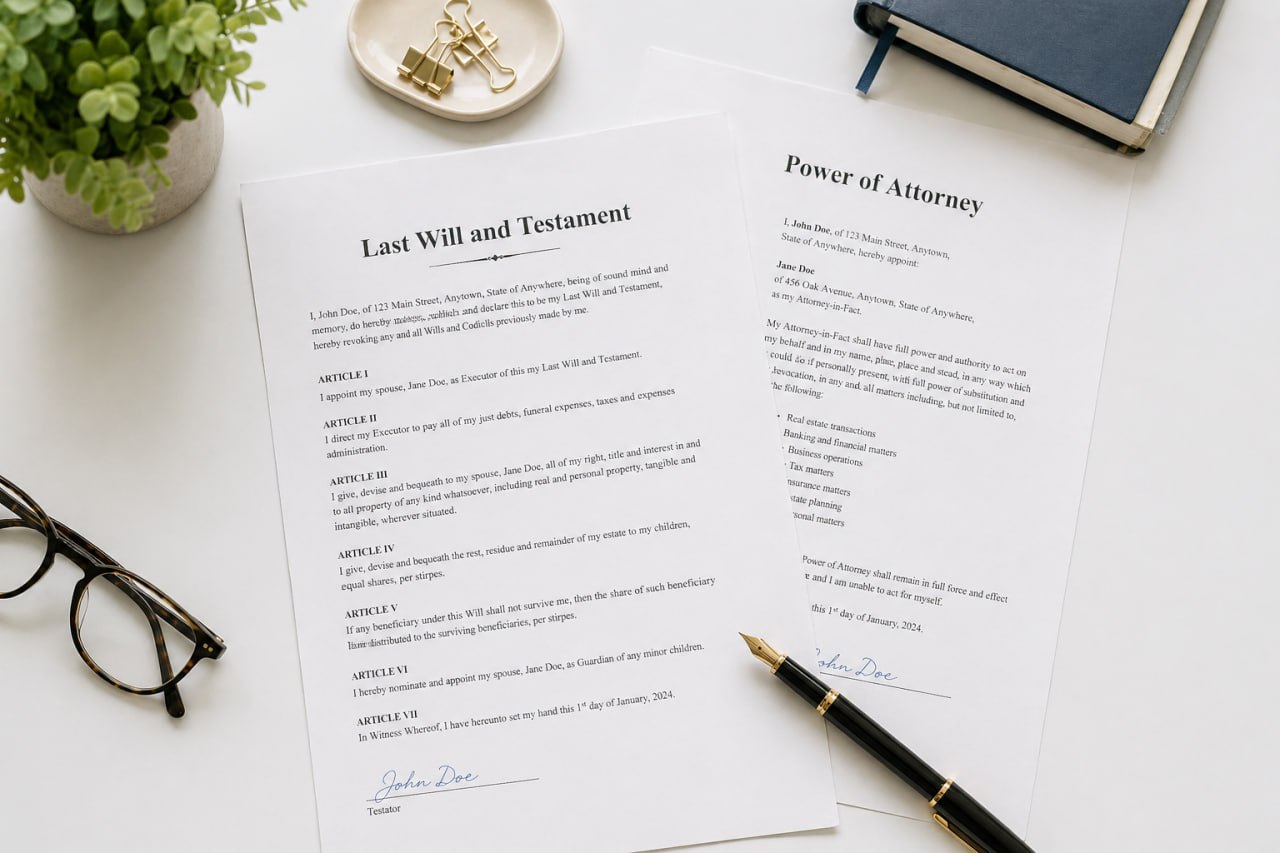
1. Legal Will
A Will governs what happens to your property after your death. Without one, Nova Scotia's Intestate Succession Act decides — and the result may be very different from your wishes. A common-law partner inherits nothing. Your estate cannot make specific gifts to friends, charities, or particular family members. If you have minor children, you will likely have no Appointment of Guardian in place for them — see below. The court appoints an administrator rather than the person you would choose.
A Will addresses all of this. It costs $395 through this service and takes one hour.
2. Enduring Power of Attorney
A Power of Attorney governs who manages your finances and property if you become incapacitated while still alive. Without one, your family has no legal authority to access your accounts, pay your bills, or deal with your property — even in an emergency. The alternative is a court-ordered guardianship process that is slow, expensive, and emotionally difficult.
An Enduring Power of Attorney must be signed while you still have capacity. A medical event can eliminate that option without warning.
3. Personal Directive
A Personal Directive governs who makes healthcare decisions on your behalf if you cannot make them yourself. Without one, healthcare providers must work through a legal substitute decision-maker hierarchy — a process that can leave your family uncertain about their authority and your doctors uncertain about who to listen to.
Like a Power of Attorney, a Personal Directive must be signed while you have capacity.
4. Appointment of Guardian (optional — for parents of minor children)
If you have children under 19, an Appointment of Guardian names the person responsible for raising them if you cannot. Unlike a guardianship clause in a will — which only takes effect on death — a standalone Appointment of Guardian is also effective if you become mentally incapacitated while still alive. This is an important distinction: a serious accident could leave both parents incapacitated without either dying. Without this document, a court application would be required before anyone has the legal authority to act as guardian.
The Appointment of Guardian is prepared in the same one-hour appointment as the other documents. Learn more about the Appointment of Guardian.
Why These Documents?
Each document addresses a different situation:
- Will — after you die
- Power of Attorney — during incapacity (financial decisions)
- Personal Directive — during incapacity (healthcare decisions)
- Appointment of Guardian — if you have minor children, on death or incapacity
Having only a Will leaves you unprotected during incapacity. Having only a Power of Attorney leaves your estate plan unwritten. All three core documents together provide complete coverage — and for parents, the Appointment of Guardian fills the one gap none of the others can.
Get All Three Done in One Appointment
Will, Power of Attorney, and Personal Directive — one hour, $395. Halifax and Dartmouth locations.