The role of a Notary Public is widely used but often misunderstood. This article explains what a Notary Public is, what they can and cannot do in Nova Scotia, and when their services are required.
What Is a Notary Public?
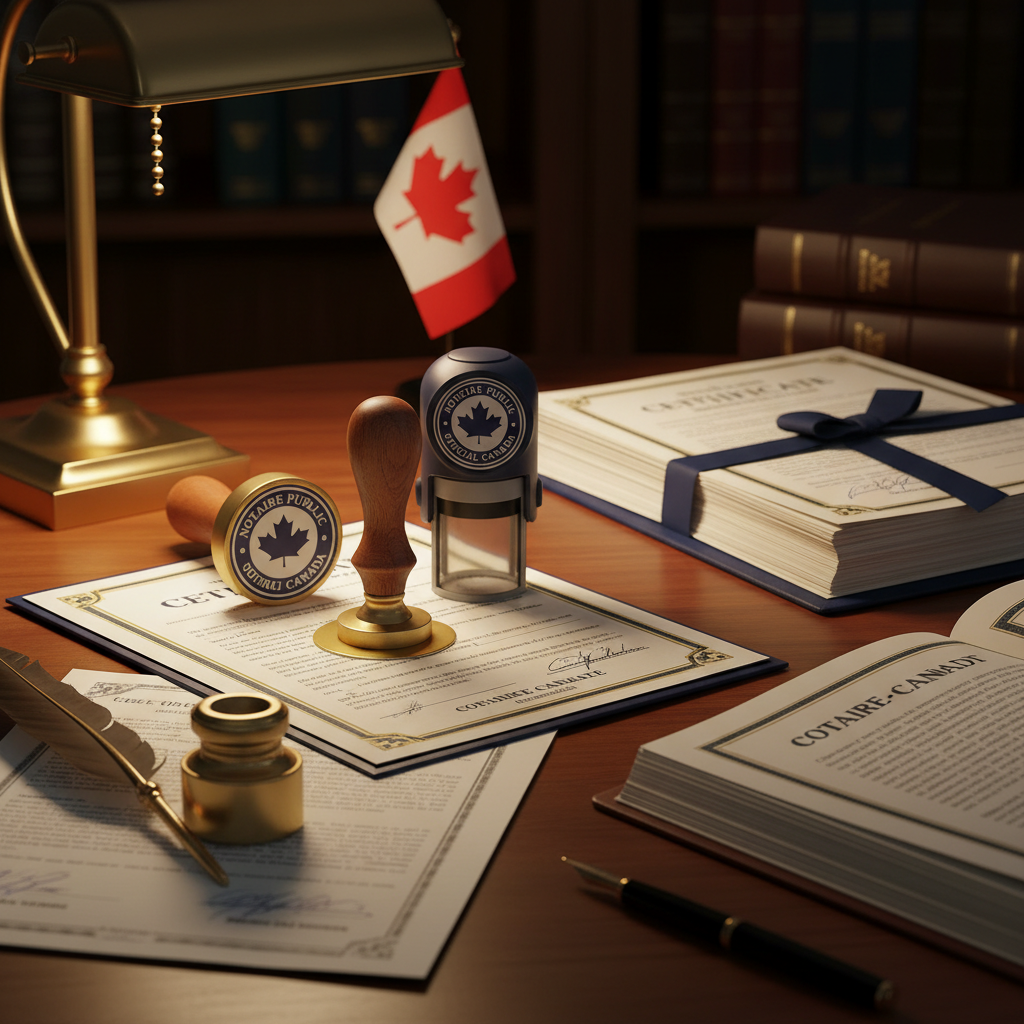
A Notary Public is a public official appointed under Nova Scotia's Notaries and Commissioners Act. They are authorized to witness and authenticate signatures on legal documents, administer oaths and affirmations, certify copies of original documents, and perform related formal legal acts. Their signature and official seal certify that a signing was properly performed — that the signer is who they claim to be, acted willingly, and that the document is authentic.
What a Notary Can Do
- Witness and notarize signatures on legal documents
- Certify true copies of original documents
- Administer oaths and affirmations for affidavits and statutory declarations
- Supervise the execution of Wills, Powers of Attorney, and Personal Directives
- Prepare and certify documents for use abroad (including apostille preparation)
- Act as local agent for real estate closing documents
What a Notary Cannot Do
A Notary Public is not a practicing lawyer and cannot give legal advice. They cannot advise you on whether a particular provision in your Will is appropriate for your situation, on the tax consequences of your estate plan, or on your legal rights in a dispute. For legal advice, you need a practicing lawyer.
Notary vs. Commissioner of Oaths
A Commissioner of Oaths and a Notary Public both witness signatures and administer oaths — but their authority differs in scope. A Commissioner of Oaths is typically authorized within a specific province for specific document types. A Notary Public has broader authority, and their seal carries more formal weight — particularly for international documents, court filings, and situations where a Notary is specifically required. If a document specifies that it must be notarized by a Notary Public, a Commissioner of Oaths is not an acceptable substitute.
When You Specifically Need a Notary
You will generally need a Notary (rather than just a Commissioner) for: documents intended for use outside Canada; real estate transactions; many immigration-related documents; formal corporate documents; and Will execution where you want an Affidavit of Execution to accompany the Will.
One Appointment. One Hour. $395.
Walk out with your Will, Power of Attorney, and Personal Directive — signed, witnessed, and notarized. Free updates included. No hidden costs.
⭐ Rated 5.0 across 192 Google reviews in Halifax and Dartmouth