Major life events can fundamentally change what your existing Will says — or whether it remains valid at all. Nova Scotia law has specific rules about how marriage and divorce interact with Wills.
Marriage
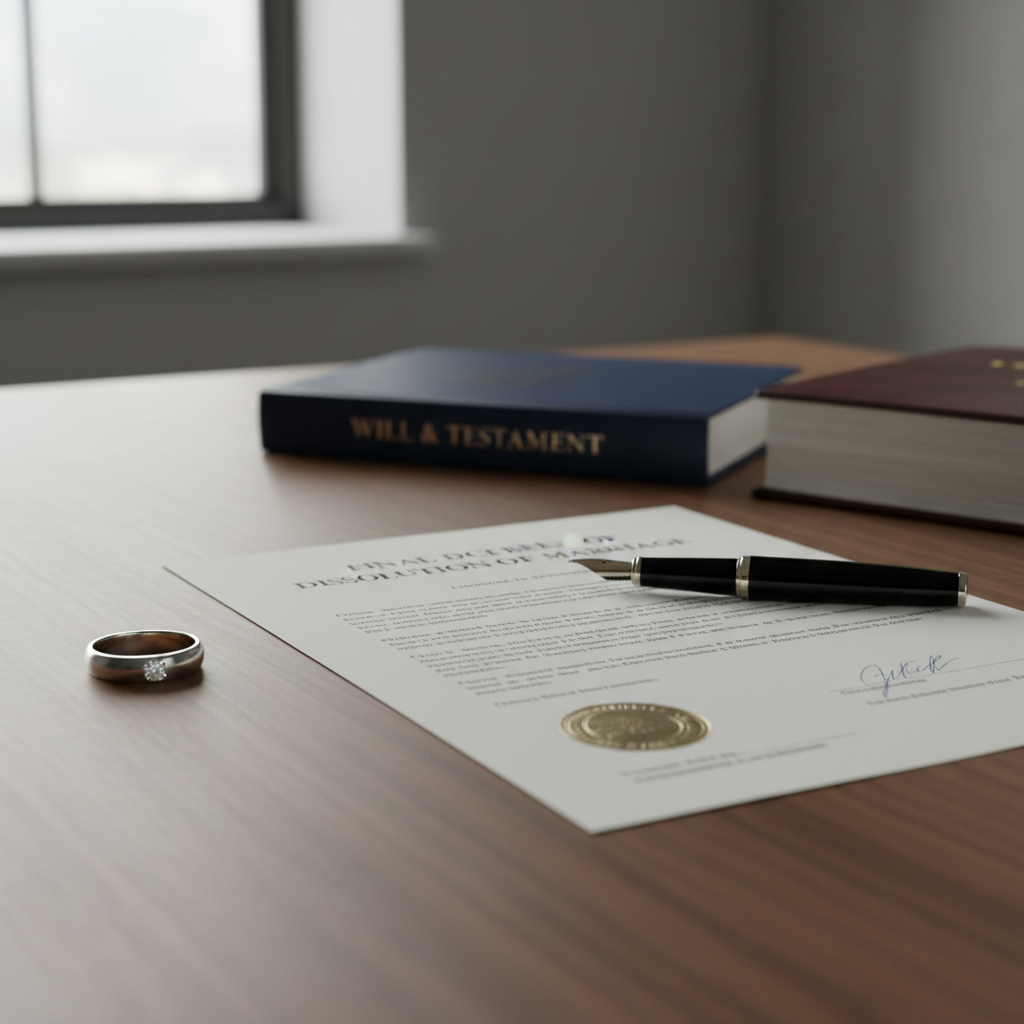
In Nova Scotia, marriage does not automatically revoke an existing Will (unlike some other provinces). However, your Will may not reflect your new circumstances. If your Will was made before marriage and does not adequately provide for your spouse, they may be entitled to elect against the Will under the Matrimonial Property Act — receiving their matrimonial property rights instead of what the Will provides.
Any significant life change — including marriage — should prompt a review and update of your Will.
Separation
Separation alone does not revoke or change your Will in Nova Scotia. Until a divorce is finalized, your separated spouse remains your spouse for Will purposes. If you die separated but not yet divorced, and your Will leaves your estate to your spouse, that gift may stand. Review and update your Will as soon as you separate.
Divorce
Under Nova Scotia's Wills Act, a divorce does revoke any gift to a former spouse and any appointment of that spouse as Executor. The rest of the Will remains valid. This means your estate would be distributed as if your former spouse had predeceased you — which may or may not be what you intended for the residue of your estate.
After a divorce, you should make a new Will rather than relying on the partial revocation rule.
Common-Law Relationships
Common-law partners have no automatic inheritance rights under Nova Scotia's intestacy rules. If you are in a common-law relationship and want your partner to inherit, you must have a valid Will that says so. This is one of the most common and consequential estate planning gaps in Nova Scotia.
Update Your Will After a Life Change
Annual updates are included at no charge. Book an appointment to review and revise your Will.