If you are inviting a family member or friend from abroad to visit Canada, their visa application may require a notarized invitation letter from you as the host. This article explains when a notarized letter is required, what it must contain, and how to get it prepared and notarized in Halifax or Dartmouth.
What Is a Temporary Resident Visa?
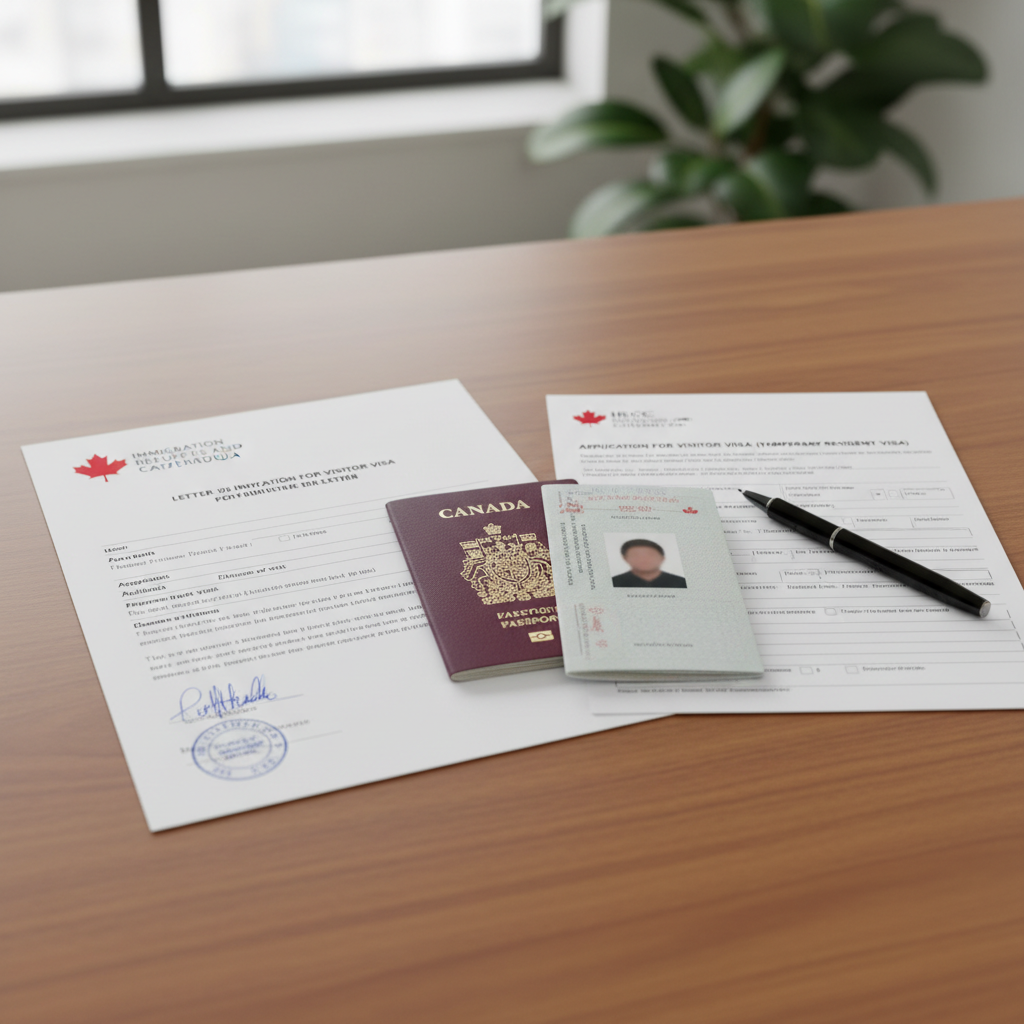
A Temporary Resident Visa (TRV) — commonly called a visitor visa — is the document that allows foreign nationals from visa-required countries to enter Canada for a temporary period. It is issued by Immigration, Refugees and Citizenship Canada (IRCC) and must be obtained before travel. Citizens of some countries can enter Canada without a visa but must obtain an Electronic Travel Authorization (eTA) instead; citizens of others require a full TRV.
The application process requires the applicant to demonstrate that they have genuine ties to their home country, sufficient funds for the visit, and a clear intention to return home when the visit ends. A notarized invitation letter from the Canadian host is one of the documents that can support the application — particularly where the visa officer wants to verify the nature of the relationship and the host's capacity to support the visit.
When Is a Notarized Invitation Letter Required?
IRCC does not uniformly require a notarized invitation letter for every visitor visa application. Whether one is needed depends on several factors:
- The applicant's country of origin — some countries have higher visa refusal rates, and applications from those countries receive closer scrutiny
- The nature of the relationship between the applicant and the host — family visits, particularly those involving elderly parents or extended family, often attract more documentation requests
- Whether the host is sponsoring the applicant's expenses during the visit
- Whether the visa officer has specific concerns about the applicant's ties to their home country
Even where IRCC does not explicitly require a notarized letter, providing one can strengthen the application. A letter bearing a Notary's seal confirms that the host appeared in person, was identified, and signed voluntarily. This carries more evidentiary weight than an unnotarized letter that could have been prepared by anyone.
What the Letter Should Include
There is no prescribed form for an invitation letter, but it should be comprehensive and specific. A strong invitation letter includes:
- Your full legal name as it appears on your government-issued identification
- Your complete Canadian address — street, city, province, and postal code
- Your immigration status — Canadian citizen, permanent resident, or other (with documentation if applicable)
- Your relationship to the applicant — be specific: "my mother," "my brother," "my friend of 15 years," not simply "family member"
- The applicant's full name and date of birth exactly as they appear on the applicant's passport
- The purpose of the visit — for example, "to attend my daughter's wedding," "to visit family and see the Atlantic provinces," or "to assist me during a period of illness"
- The expected dates of the visit — include an estimated arrival date and length of stay
- Accommodation arrangements — confirm that the visitor will be staying with you, or provide the name and address of where they will be staying
- Financial responsibility — if you are undertaking to cover the visitor's expenses, say so explicitly. If the visitor has their own funds, note that as well
- A statement about the visitor's intention to return home — reference their ties to their home country, such as employment, property ownership, or family responsibilities
Supporting Documents to Provide Alongside the Letter
A notarized invitation letter is more persuasive when it is accompanied by documents that corroborate what you have stated. Consider including copies of:
- Your Canadian passport or permanent resident card
- Recent bank statements showing you have the financial means to support the visit if you have undertaken to do so
- A letter from your employer confirming your employment and income, if relevant
- Documentation of your relationship to the applicant — for example, a birth certificate showing a family relationship, or photographs and correspondence demonstrating a long-standing friendship
These documents are provided by the applicant as part of their visa package, not submitted separately by the host. Ensure your applicant has complete copies of everything before submitting.
Getting Your Letter Notarized
Notarization of an invitation letter is a straightforward process. Here is what to expect:
Prepare your letter in advance. Type the letter yourself using the guidelines above, print it out unsigned, and bring it to your appointment. The Notary will not draft the letter for you — notarization is the authentication of your signature on a document you have prepared, not legal drafting.
Bring government-issued photo ID. The Notary must verify your identity before witnessing your signature. A driver's licence, Canadian passport, or other government-issued photo ID is required.
Sign in the presence of the Notary. Do not sign the letter before your appointment. The Notary must witness you signing the document. Once witnessed, the Notary will apply their signature and official seal, confirming that you are who you say you are and that you signed willingly.
The appointment is brief. Notarization of an invitation letter typically takes 15 to 30 minutes. You will leave with a notarized original that the applicant can include in their visa package.
Common Questions
Can I get my letter notarized by a Commissioner of Oaths instead? A Commissioner of Oaths can witness a statutory declaration, but not every IRCC document request is satisfied by a Commissioner. A Notary Public provides a higher level of authentication and is recognized by immigration authorities internationally. If you are uncertain what is required, a Notary is the safer choice.
Does the letter need to be in English or French? IRCC processes applications in English and French. If the letter is in another language, a certified translation will also be required. Preparing the letter in English avoids this additional step.
What if my visa application requires an Affidavit of Support? An Affidavit of Support is a sworn statement — a different document from an invitation letter. If IRCC has specifically requested an Affidavit of Support, bring that form to your appointment rather than a self-prepared letter. The Notary will administer the oath and apply their seal to the completed form.
Book a Notarization Appointment
Appointments available Tuesday and Friday in Halifax, Monday and Thursday in Dartmouth. Appointment recommended.