If you’ve been asking yourself how do I make a will, you’re in the right place. This page explains exactly what making a legal will involves in Nova Scotia — the legal requirements, what the document should contain, and the quickest and most affordable way to get it done properly. We’ll also cover Power of Attorney and Personal Directive, since most people prepare all three documents at the same time.
The short version: you need a written document, your signature, and two witnesses. A notary supervises the signing, provides the witnesses, and notarizes the affidavit of execution. The whole appointment takes about an hour.
Who Can Make a Will in Nova Scotia?
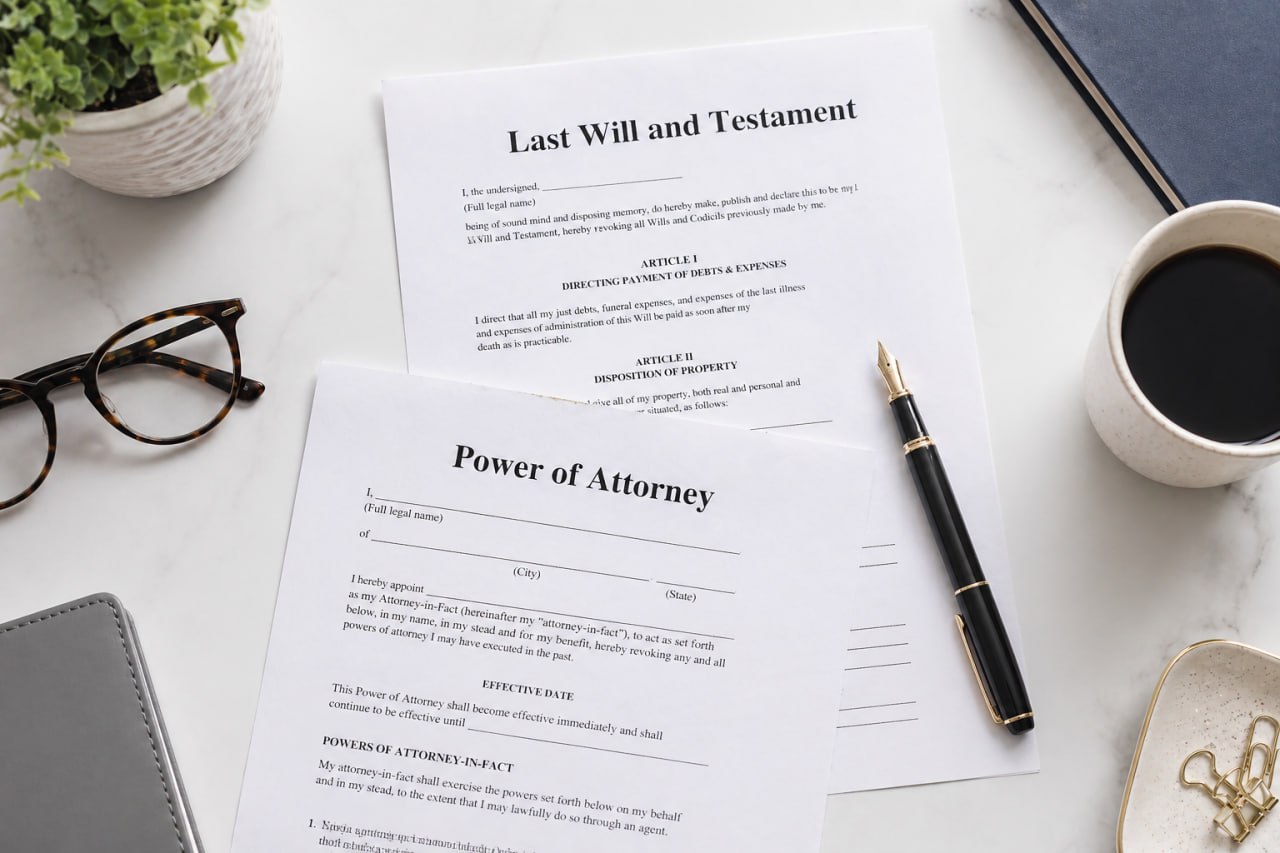
You can make a valid will in Nova Scotia if you are 19 years of age or older and have the mental capacity to understand what you are signing. Capacity means you understand:
- What a will is and what it does
- The general nature and extent of your property
- Who your natural heirs are
- That you are making a deliberate decision about how your estate will be distributed
A person with an early dementia diagnosis may still have full legal capacity to make a will. Capacity is assessed at the moment of signing, not at the time you first start thinking about it.
What Makes a Will Legally Valid?
Nova Scotia’s Wills Act sets out the formal requirements. To write a will that holds up legally, it must be:
- In writing (typed or handwritten)
- Signed by you at the end of the document
- Witnessed by two people who are both present at the same time when you sign
- Signed by each witness in your presence
Neither witness can be a beneficiary under the will, nor the spouse of a beneficiary. If a beneficiary witnesses the will, their gift is void — even though the rest of the document remains valid. This is the most common error in DIY wills.
Nova Scotia does not recognize holograph wills — that is, wills that are entirely handwritten and unwitnessed. Even a handwritten will requires two witnesses to be legally valid. This differs from some other provinces where holograph wills are permitted.
How to Write a Will: What It Should Include
Once you understand the legal requirements, the next question is what to put in it. A properly drafted will should cover:
Executor. This is the person responsible for administering your estate — collecting assets, paying debts, filing tax returns, and distributing what remains. Name an alternate in case your first choice cannot act.
Guardian for minor children. If you have children under 19, a standalone Appointment of Guardian document is prepared alongside the will. This document is also effective during a period of parental incapacity, not just after death — which is why it is prepared as a separate document rather than a clause within the will.
Specific gifts. If you want a particular item — jewellery, a vehicle, a family heirloom — to go to a specific person, identify it clearly. Vague descriptions create disputes.
Distribution of the residue. After specific gifts and debts are paid, the “residue” is what remains. Your will should clearly state who receives it and in what proportions.
Alternate beneficiaries. What happens if a beneficiary dies before you? A well-drafted will names alternates or specifies that the gift falls back into the residue.
Do You Need a Lawyer to Make a Will?
No. In Nova Scotia, a Notary Public can prepare and supervise the execution of a legally valid will. For most Nova Scotians — straightforward estates, standard family situations, no complex tax or trust needs — a notary provides a legally sound, efficient, and significantly more affordable alternative to a law firm.
The full package at Worry Free Will & Notary includes a Legal Will, an Enduring Power of Attorney, and a Personal Directive — everything signed and notarized in one appointment. $395 for one person. $495 for a couple. Free updates are included if your circumstances change.
For estates with significant business assets, cross-border assets, complex trusts, or disability planning for dependants, an estate lawyer with specialized expertise may be more appropriate. A notary will tell you honestly if your situation calls for that level of complexity.
Making a Will Yourself vs. Using a Professional
Some Nova Scotians consider making their own will using a kit or an online template. It is legal to do so, and a handwritten (holograph) will can be valid in Nova Scotia if it meets the legal requirements. But there are real risks.
A homemade will must be entirely in your own handwriting and signed by you — no printed portions, no witnesses. Any deviation can render it invalid. More commonly, homemade wills use printed templates that require two witnesses, but the drafting is vague, the gift language is ambiguous, or critical provisions — such as what happens if a beneficiary predeceases you — are simply missing.
The result is a document that appears valid but creates serious problems for your executor. Courts have spent more time and money resolving ambiguous homemade wills than the cost of having the will prepared professionally in the first place.
A professionally prepared will costs $195 at Worry Free Will & Notary. The document is clear, properly executed, includes an Affidavit of Execution, and covers the scenarios a homemade will typically does not. For most people, it is the straightforward choice.
The Affidavit of Execution
A will prepared through Worry Free Will includes a notarized Affidavit of Execution — a sworn statement signed by one of the witnesses confirming the will was properly executed. This document is filed with the probate court after your death and eliminates the need for the court to locate a witness after the fact. It speeds up and simplifies the probate process for your executor.
When to Update Your Will
A will should be reviewed after any significant life change. Common triggers include:
- Marriage or divorce
- The birth or adoption of a child or grandchild
- A beneficiary or executor predeceasing you
- A significant change in your assets
- Moving to a new province
In Nova Scotia, marriage does not automatically revoke a will made before the marriage — unlike some other provinces. Updating your will after marriage is strongly recommended even though it is not legally required. Divorce, by contrast, automatically revokes gifts to a former spouse and their appointment as executor, but leaves the rest of the will intact.
Free updates are included with every will prepared through this practice. There is no additional charge to update your will if your circumstances change.
What Happens Without a Will?
Dying without a will — called dying intestate — means Nova Scotia’s Intestate Succession Act determines who inherits your estate. The results are often not what people would have chosen:
- A common-law partner receives nothing under the intestacy rules, regardless of the length of the relationship
- Specific gifts to friends or charities cannot be made
- The court appoints an administrator — not necessarily the person you would have chosen
- Minor children’s shares are paid into court until they turn 19
What About Power of Attorney?
Most people preparing a will also need an Enduring Power of Attorney. This is a separate document that authorizes someone to manage your finances and property if you become incapacitated. Without one, your family has no legal authority to access your bank accounts or pay your bills — even in an emergency. Without a valid Power of Attorney, the only recourse is a court application, which is expensive and slow.
If you already have a will and need to add a Power of Attorney and Personal Directive, the standalone price is $195 for one person or $245 for a couple.
What Is a Simple Will?
Many people describe what they need as a “simple will” — meaning their situation is straightforward and they want it done without fuss or a large legal bill. If you want your spouse to inherit everything, or you want to split your estate equally among your children, that is exactly what this practice handles every day.
The term “simple” refers to your intentions, not the document itself. A legally valid will — even for a modest estate — still requires proper drafting, correct execution, two witnesses, and a notarized Affidavit of Execution. Skipping any of those steps creates problems for your executor and your family after you are gone.
What a notary provides that a kit cannot:
- A professionally drafted document that uses correct legal language
- Witnesses provided at the appointment — you do not need to bring anyone
- A notarized Affidavit of Execution that simplifies probate
- An hour of your time to talk through executor choice, alternates, and any questions
- Free updates if anything changes after signing
The flat fee is $395 for one person or $495 for a couple, which includes the will, an Enduring Power of Attorney, and a Personal Directive. Most people are surprised at how affordable it is compared to a law firm — and how little time it takes.
If your situation genuinely is straightforward, a notary is the right choice. You get a lawyer-quality document at a fraction of the cost, with no hourly billing and no surprises.
Ready to Make Your Will?
Will · Power of Attorney · Personal Directive · Witnesses · Notarization — all included.
$395 individual · $495 couple · Free updates included